Play Therapy
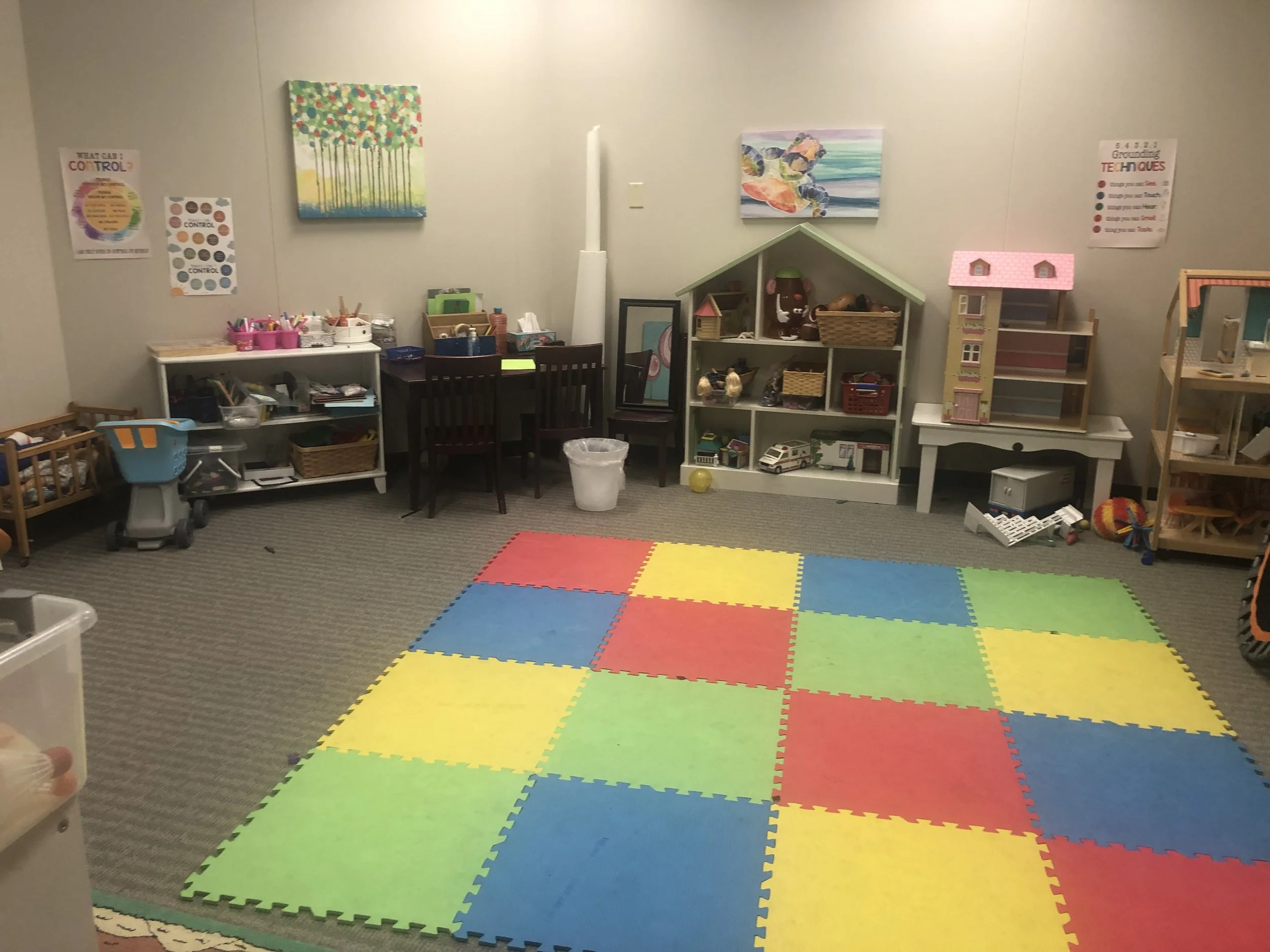
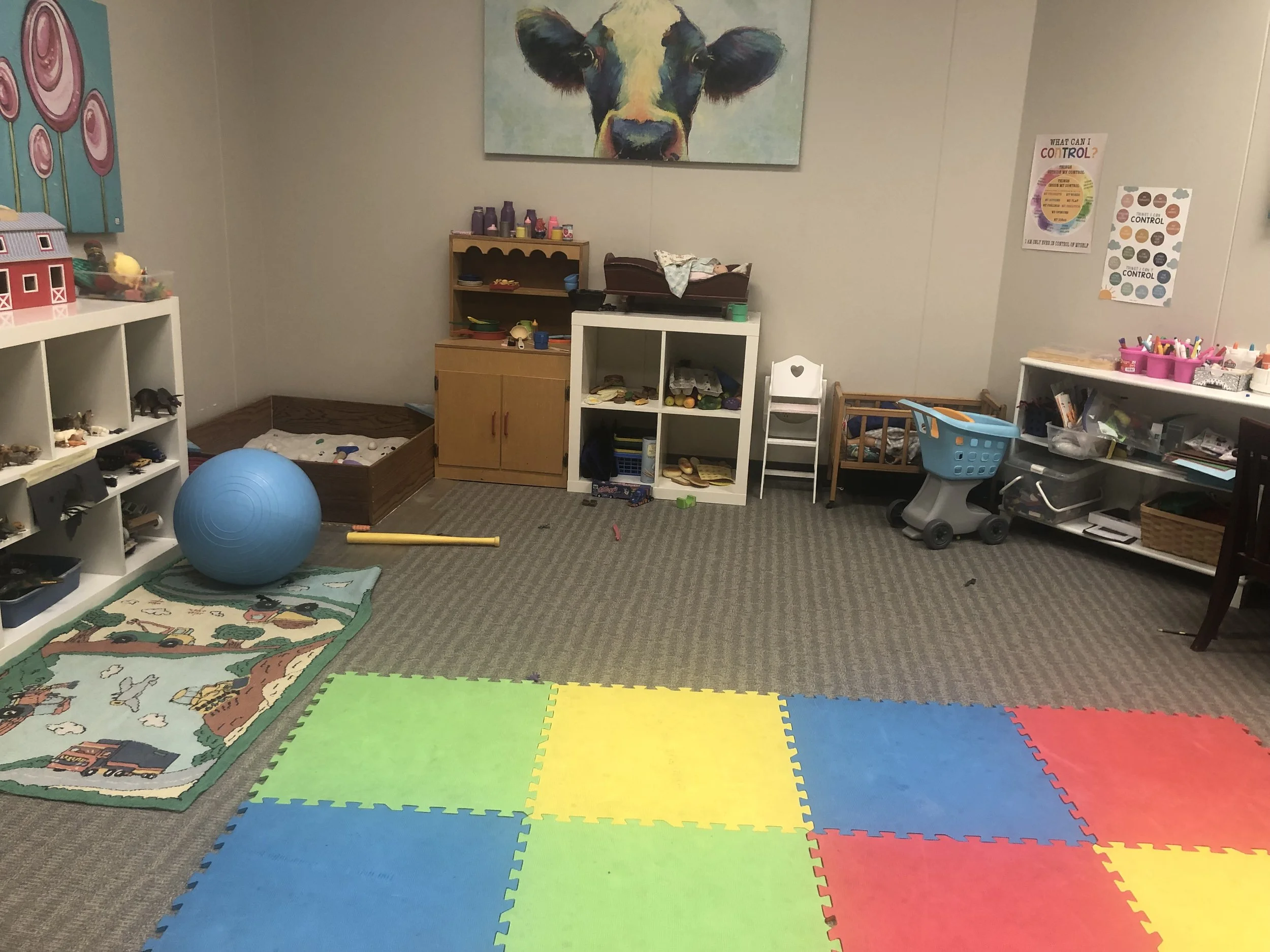
I have been providing play therapy for over five years to children experiencing a variety of challenges, including severe abuse, anxiety, trauma, and grief.
Play is an important way children process their feelings and experiences, particularly for young children and/or older children who are developmentally delayed. In many ways, children can use play to communicate and work through experiences in the same way adults use words to process their experiences and connect with others. Many children benefit from having a trusted adult who can communicate care, provide safety, and stay present with them as they express themselves through play.
You can see the playroom I use in my Richardson office in the pictures above. Each toy and activity is intentionally selected to provide opportunities for role play, creativity, emotional expression, and exploration. Through play, children can communicate experiences and emotions that may be difficult to put into words. As the therapist, I use the therapeutic relationship and what I observe in the child's play to help the child develop greater understanding, emotional expression, coping skills, and a sense of safety.
For play therapy to be most effective in supporting long-term growth, I believe parental involvement is essential. In my practice, this typically includes regular parent-counselor meetings without the child present. These meetings give us an opportunity to discuss themes I am observing in the playroom, understand what may be happening outside of the therapy room, and consider how you can best support your child at home.
I also believe that the best results come from a trusting relationship between the parent and therapist. Parents need to feel heard, understood, and respected as an important part of their child's care. You know your child in ways that I cannot, and I value your experience and expertise as we work together. I will help you identify the strengths in both you and your child and find practical ways to build on those strengths.
Ultimately, parents have a unique opportunity to carry the principles of play therapy into everyday life. My goal is not only to help your child feel better in the therapy room, but also to help improve your own parent-child bond.